A webinar is one of the few marketing formats that holds someone’s full attention for twenty minutes or more. That is long enough to explain a service, show a product and answer doubts before you ask for a decision. The question most businesses get stuck on is not whether to run webinars but how: live each time, or recorded once and replayed on a schedule.
What a live webinar gives you
Live sessions feel immediate. You can read the room, react to questions and adjust the pitch in real time. For a product launch, a one-off announcement or a small, high-value audience, that flexibility is worth a lot.
The cost is your calendar. Every session needs preparation, rehearsal and a presenter at a fixed time, which usually suits one timezone better than the others. When the session ends, anyone who missed it gets a replay that can’t answer them back.
What an evergreen webinar gives you
An evergreen webinar is prepared once and shown repeatedly, often daily. People can join at a time that suits them, and your best version of the pitch runs every time. The trade-off has traditionally been interaction: a plain recording cannot respond to a question.
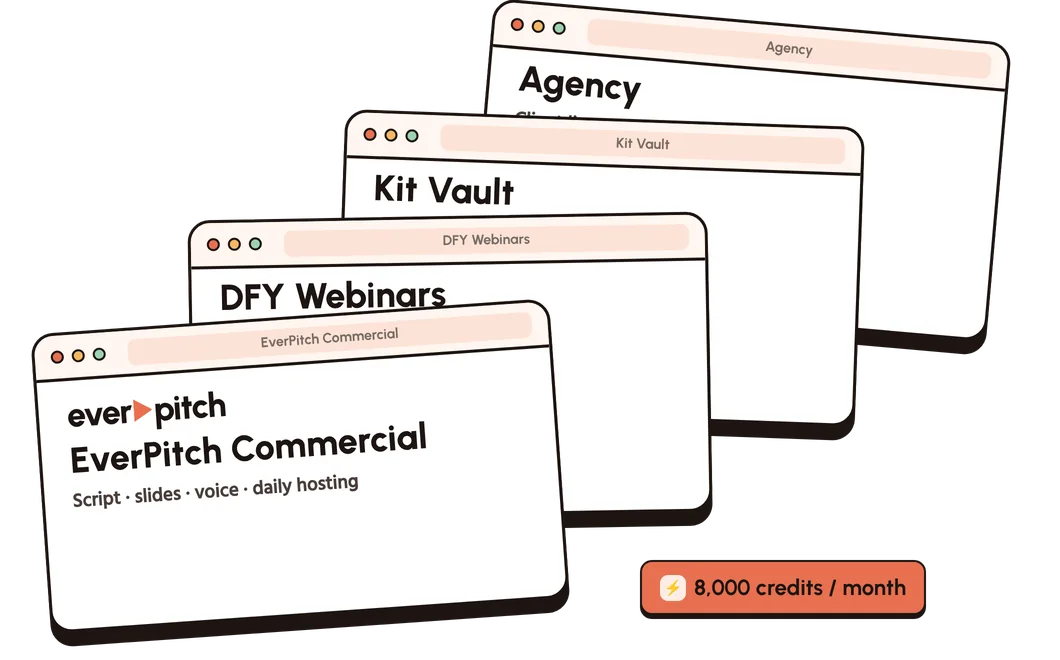
Tools such as EverPitch’s automated hosting try to close that gap. The talk plays on a shared clock so everyone in a session sees the same moment, and an AI host answers questions out loud from the webinar’s own content.
A simple way to choose
- Choose live when the content changes every time, when the audience is small and valuable, or when the event itself is the news.
- Choose evergreen when you explain the same offer again and again, when your audience spans timezones, or when you can’t present every day.
- Combine them by running one live session, then turning the recording into an evergreen webinar. EverPitch can import a recording of up to 2 GB and either keep the full video or cut a shorter version.
Be upfront about the format
Viewers deserve to know what they are watching. Avoid implying that a pre-recorded session is happening live for the first time. If you use features such as a simulated audience, say so. EverPitch adds a note to the registration page when that option is on. The FTC’s guidance on endorsements and reviews, listed in our references, is a useful read for anyone selling through webinars.
Where to start
If you already have a pitch you repeat on sales calls, that is the best candidate for an evergreen webinar. Write down the questions prospects ask most often; they become the content the host draws on when answering. Then decide how often sessions should run and where your registrations will come from.